When daylight disappears, the gear that earns space in your kit is gear that solves more than one problem. Powerology Vesta Torch Light with Built-In Power Bank - Gray combines a focused torch, a wide-area light, and a 4000mAh backup power bank in one rechargeable essential. For a campsite, a late outdoor task, or an unexpected outage, that combination makes the difference between carrying separate devices and having one dependable point of support.
The value is not simply that it shines brightly or that it can charge a device. It is about being able to choose the kind of light the moment requires, monitor remaining power with an LED battery indicator, then use the stored battery for a compatible device when staying connected matters. That is practical outdoor utility: fewer loose accessories, clearer decisions after dark, and a tool that stays relevant when plans change.
This guide looks at how the Vesta Torch Light’s 500-lumen focused beam, 4500-lumen wide glow, adjustable modes, USB-C charging, and power-bank function work together. The goal is not to treat every outing like an emergency, but to prepare for the ordinary situations—finding a route, organizing camp, checking a phone—that become harder once natural light is gone.
Why two functions matter outside
Outdoor packing is a balance between capability and clutter. A dedicated torch and a separate battery pack can both be useful, but they introduce two charging routines, two places to misplace gear, and two items competing for room. The Vesta Torch Light answers two core needs—light and reserve device power—with one rechargeable unit, making it a sensible addition to emergency camping gear.
That matters most when the plan is simple but the conditions are not. A day walk can run later than expected. A campsite can need attention after dinner. A vehicle stop, a work task outdoors, or a household power interruption can suddenly make illumination the priority while a phone battery is also running low. Having a portable power bank with flashlight capability means those needs do not automatically require separate gear.
There is also a practical mindset behind a dual-purpose tool: use power deliberately. Select the lighting option that suits the area instead of using maximum output by default, check the battery-level indicator before setting off, and treat device charging as a backup resource. Those small habits help the built-in battery support the situation rather than disappear unnoticed.
- Light helps with visibility, orientation, and tasks after dark.
- Backup power supports a compatible device when access to mains power is unavailable.
- One rechargeable item simplifies a small outdoor or emergency kit.
Choose the beam for the job
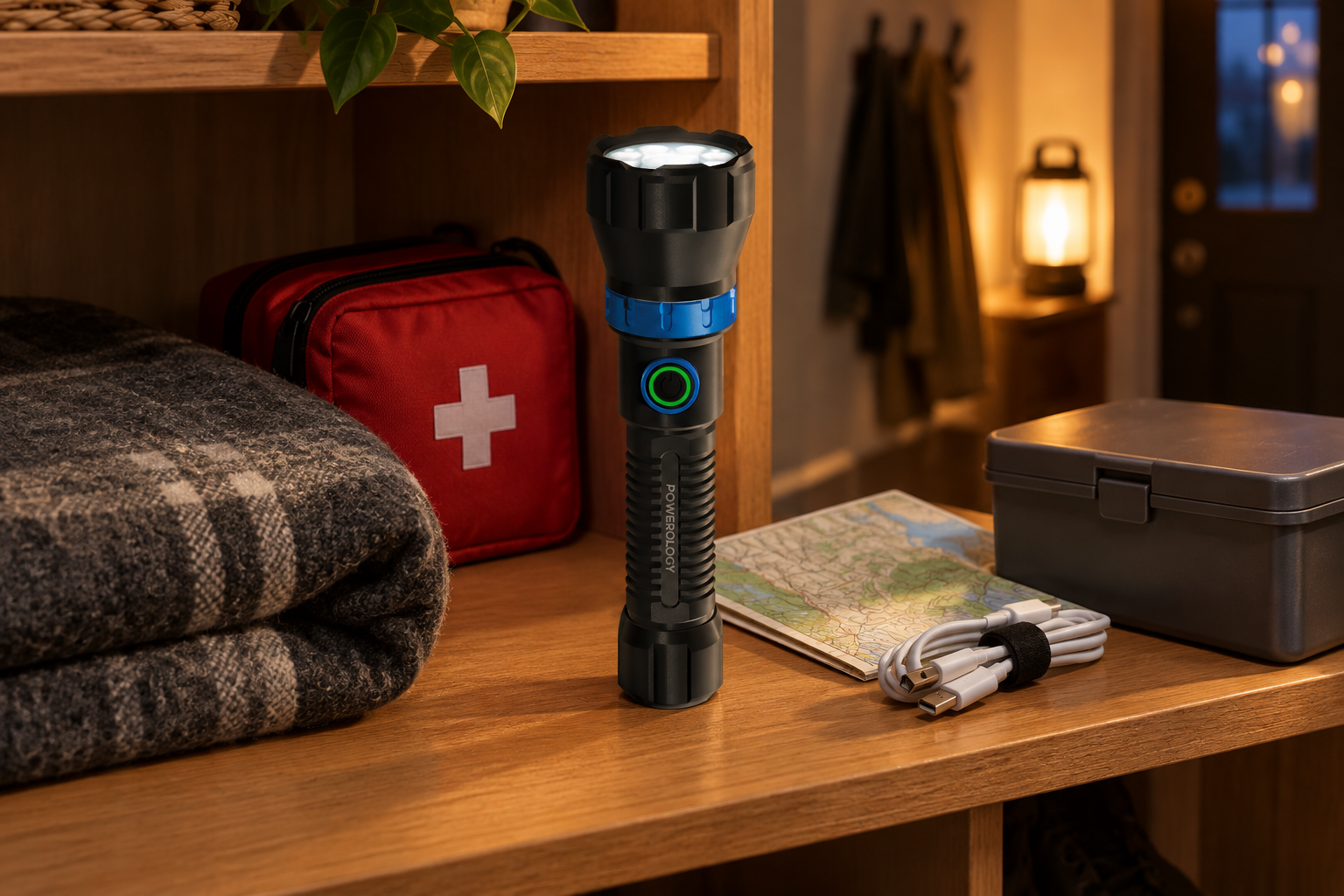
Not every dark space calls for the same kind of illumination. The Vesta Torch Light provides a focused beam rated at 500 lumens and a wide-area light rated at 4500 lumens. This gives you a useful choice between directing attention toward a more distant point and lighting a larger nearby space clearly.
The focused setting is the logical option when you want to inspect what lies ahead, identify a landmark, or direct light toward a specific outdoor task. Its stated distance reaches up to 180 meters, while its cooler 8000–9000K color temperature supports a crisp, directed lighting character. Instead of flooding every part of the scene, this option helps keep attention where it is needed.
The wide-area light is built for the moments when a group space or work area needs broader coverage. With a stated distance of up to 215 meters and a 6000–7000K color temperature, it is suited to making a large area easier to navigate and organize. Think through the space first: broad light for shared tasks and nearby surroundings; focused light for distance and detail.
The useful trade-off is simple. A stronger or wider setting can make an area easier to see, but it also asks more of the battery than a restrained setting. Matching the output to the task is therefore more than convenience—it is a way to make your outdoor charging accessories and lighting plan work longer.
Make the light last through the plan
Runtime is most useful when you think about it before the sky gets dark. The Vesta Torch Light lists a focused-beam runtime of up to 30 hours and a wide-area-light runtime of up to 15 hours. Actual use should always be planned around the mode and conditions, but those figures show why selecting the right lighting style matters.
Its focused beam includes high, medium, low, and blinking modes. The sensible starting point is not automatically high; begin with the level that lets you complete the task safely and clearly. A lower setting can be enough for checking supplies or keeping close surroundings visible, while a brighter setting may be reserved for moments where stronger visibility is genuinely helpful.
The blinking mode adds a distinct option for situations where a changing light is more appropriate than continuous illumination. What matters is being familiar with your modes before you need them. Practice switching options at home, learn where the control is in your kit, and avoid making a first-time setup decision when time or visibility is limited.
Before any overnight trip or weather-sensitive outing, charge the torch and check its LED battery indicator. During the outing, avoid turning it on repeatedly without purpose and keep it accessible rather than buried under other equipment. A light is most useful when it is ready, easy to find, and being used at an output that fits the moment.
Keep a device within reach of power
The built-in battery is what turns this from a capable torch into a more flexible outdoor companion. With 4000mAh battery capacity and a USB-C output of 5V/2A, the Vesta Torch Light can serve as a backup power source for compatible devices. That can be especially reassuring when a phone is needed for navigation, calls, messages, saved information, or simply keeping a plan organized.
Use the power-bank function with priorities in mind. If you are away from mains power, charge the device that supports your immediate needs first rather than treating available power as unlimited. A phone with a low battery may be more important than optional accessories, and a partial top-up can be the practical choice if you also expect to need light later.
Bring the appropriate cable, keep it clean and easy to locate, and check compatibility before leaving. These are small details, but they determine whether a portable power bank with flashlight function is available when it counts. It is also wise to charge devices before you leave; the power bank works best as a backup layer, not as the sole plan for every device.
Because the torch uses one stored battery for lighting and power-bank support, avoid assuming both can run without limits at the same time. Check the indicator, decide what is urgent, and use the lighting mode that matches the task. That considered approach is what makes a combined tool genuinely useful rather than merely convenient.
Build a smarter camp routine
At camp, utility comes from routine. Make charging and lighting part of setup rather than an afterthought. Keep the Vesta Torch Light where it can be found quickly, note the battery level before evening, and decide whether the next task needs the focused beam or broad-area illumination. A little organization prevents a lot of unnecessary searching in low light.
For shared spaces, broad illumination can help with arranging supplies, preparing for the next activity, or keeping the immediate area clear. For a more specific check farther away, switch to the focused-beam option. This is a better approach than relying on one setting for everything, because it aligns the torch’s output with the job instead of wasting brightness where it is not useful.
Charging fits naturally into the same routine. If a compatible device needs backup power, connect it while you are settled rather than waiting until its battery is nearly empty. Then reassess the torch’s remaining charge before bed or before moving on. The advantage is awareness: you know what power is available for both overnight lighting and the following day.
Keep expectations realistic, too. A dual-function torch reduces what you carry, but it does not remove the need to prepare. Charge it in advance, bring the needed cable, and make it one part of a wider checklist that includes the items your specific outing requires. The best emergency camping gear is gear you know, maintain, and can access without hesitation.
Prepare for weather and unexpected moments
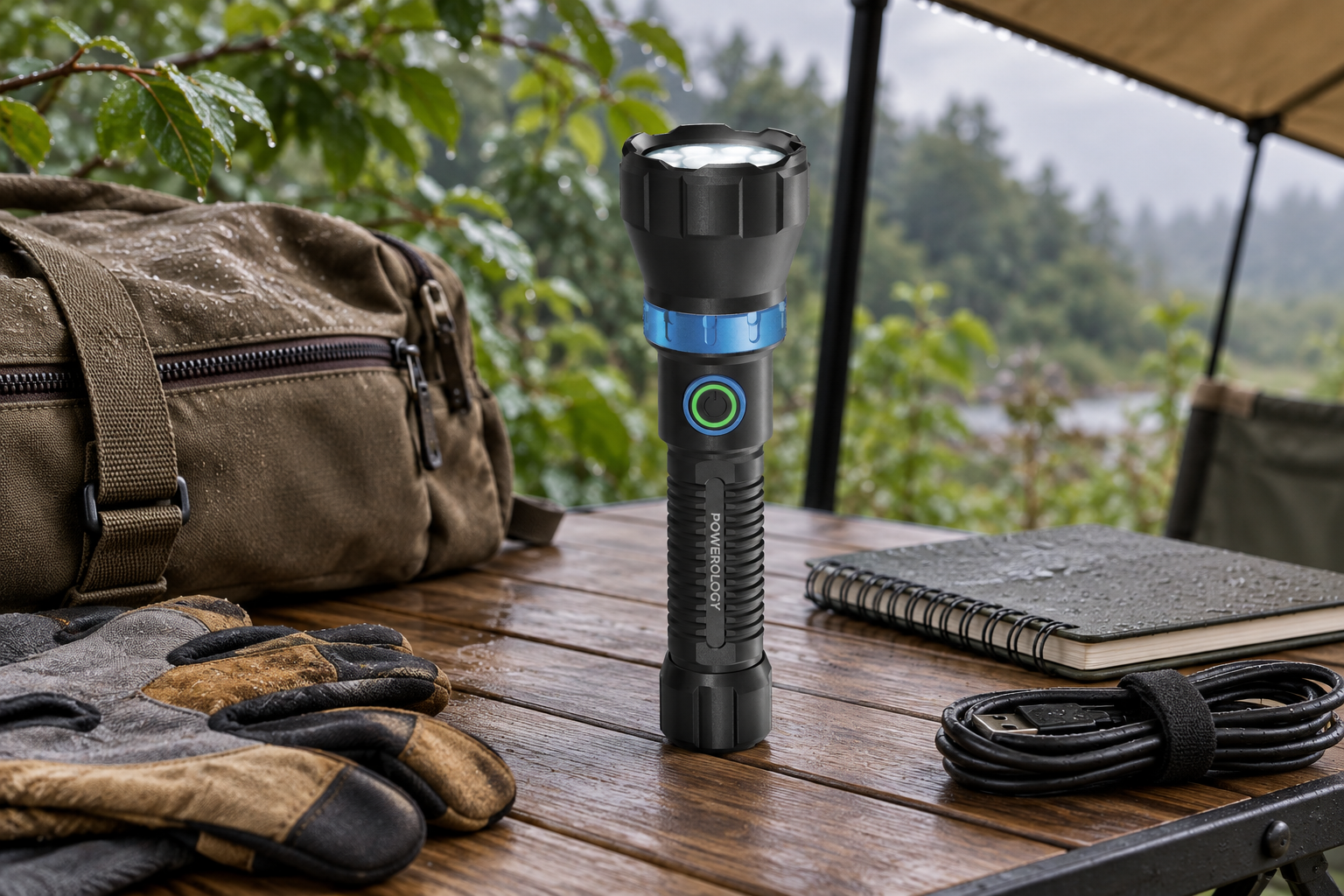
Outdoor plans can change with rain, delays, and unplanned stops. The Vesta Torch Light has an IPX4 water-resistance rating, offering water resistance for real-world conditions where splashes or rain may be part of the picture. That adds reassurance for outdoor use, but it is not a reason to treat the torch as though it is designed for every water exposure.
A sensible approach is to keep ports and cables managed, store the torch in a protected place when it is not needed, and dry it off when conditions allow. Water resistance supports preparedness; good handling supports longevity. For charging, wait for an appropriate dry setup rather than turning a wet, rushed moment into a cable-management problem.
The torch is also relevant beyond planned camping. Keep it in an emergency kit for a power outage, retain it with outdoor work supplies, or pack it for a trip where a reliable rechargeable light and device backup could be useful. In these cases, its value comes from offering clear lighting options and reserve power without asking you to locate two separate devices first.
Preparation means periodic checks, not just packing it once. Recharge after use, inspect your charging cable, and check the LED indicator before periods when you may need it. A ready torch is far more useful than a sophisticated one that has been left depleted at the bottom of a bag.
Recharge with confidence before you leave
A dependable outdoor tool begins with a dependable charging habit. The Vesta Torch Light recharges through a USB-C charging interface, with a stated charging current of 1.5A and a stated charging time of 4–6 hours. Plan that window before departure instead of adding it to a last-minute packing rush.
Charge the torch fully in a suitable dry location, then use the LED battery indicator as your quick readiness check. If the torch has been sitting unused, checking it ahead of time is worthwhile; batteries should not be assumed ready merely because the device was packed. This simple step turns the power-bank feature from a nice idea into usable contingency power.
It helps to create a return-home routine as well. After an outing, recharge the torch, return the appropriate cable to the same storage place, and take note of anything that should be cleaned or organized before the next trip. That routine protects the tool’s role as reliable emergency gear rather than leaving it dependent on memory.
Do not overlook the benefit of USB-C in a kit built around charging preparation. It gives the torch a clear, modern recharge connection, while the torch’s own USB-C output is available for compatible device support. Keep the focus on the essentials: start charged, know your battery level, and reserve power thoughtfully once you are away from an outlet.
One tool, more outdoor readiness
The strongest reason to pack the Powerology Vesta Torch Light with Built-In Power Bank - Gray is not one headline number. It is the way its capabilities work together: a 500-lumen focused beam for directed visibility, a 4500-lumen wide-area light for larger spaces, selectable modes for changing conditions, and a 4000mAh power-bank function for compatible devices.
For camping, outdoor tasks, and emergency preparation, that combination supports a calmer response when daylight or mains power is unavailable. You can light the area you need, conserve energy with a more appropriate mode, check the battery indicator, and retain the option to support a device. It is a straightforward way to reduce kit complexity without reducing practical options.
The key is to use it deliberately. Charge before leaving, pack the appropriate cable, choose focused or wide light according to the situation, respect its IPX4 water resistance, and think of the built-in power bank as reserve power. Those habits let the torch do what versatile gear should do: make an outdoor plan easier to manage when conditions become less predictable.
Whether it lives with your camping supplies, outdoor work essentials, or emergency kit, the Vesta Torch Light helps cover two important bases in one rechargeable device. When lighting and connection both matter, that is utility worth planning around.