A great trip, a productive remote day and a calm response to a blackout all have one thing in common: they depend on power being available when the wall socket is not. The Powerology Pater IV 2000W Portable Power Station - Grey is built for those bigger moments, combining a 1102.5Wh battery capacity, 2000W AC output and a broad mix of ports in one high-capacity portable power station.
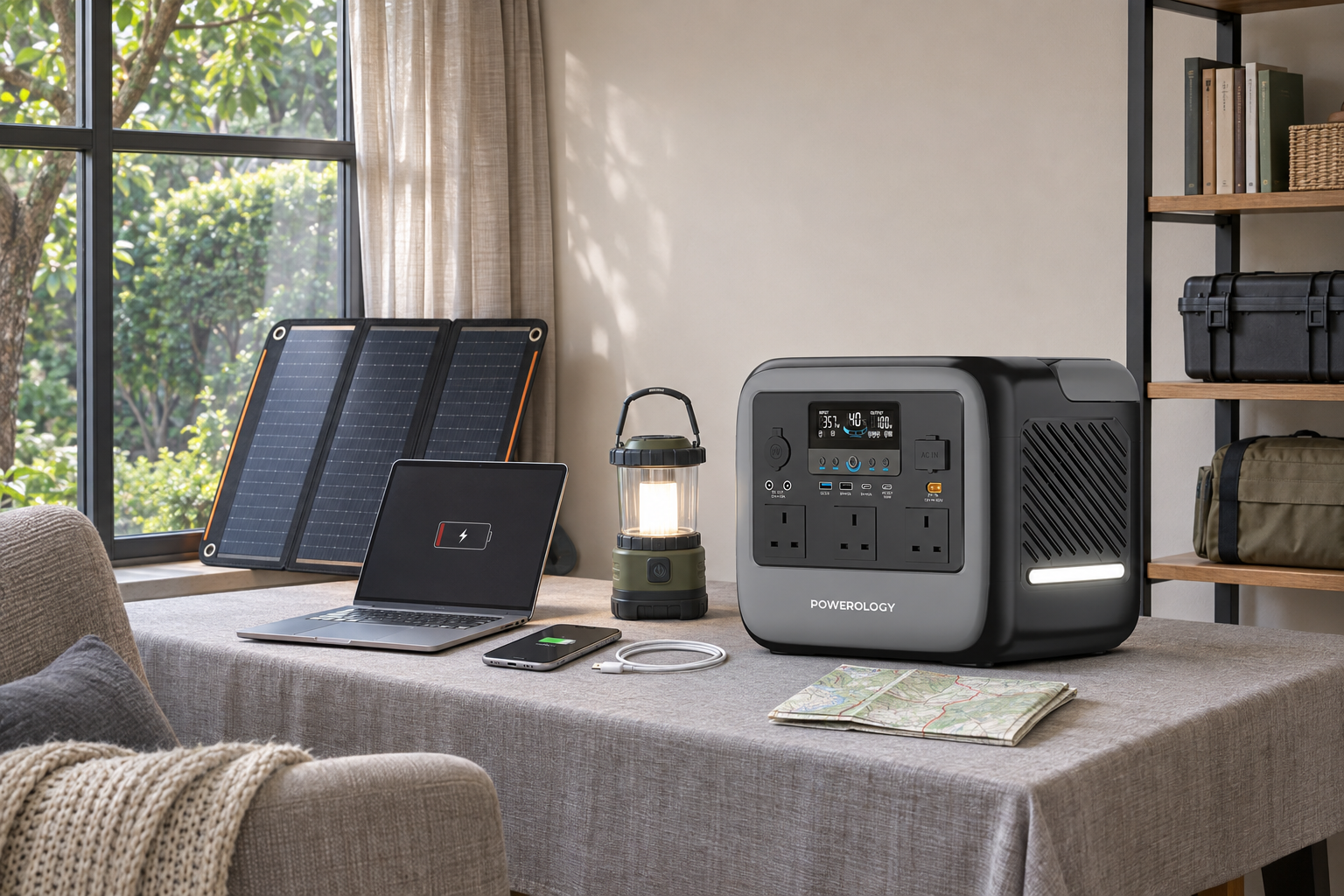
Think of it as a practical bridge between fixed mains power and the places life takes you. It can support compatible campsite gear, travel electronics and essential household devices during an interruption, while its three UK-style AC outlets, DC outputs, USB ports and wireless charging give a group of devices room to connect at once.
The key is not to treat capacity as a vague promise. A reliable road trip power station works best when you know what you plan to run, check each device’s power label and build a sensible priority list. This guide explains how the Pater IV fits into road trips, outdoor setups and emergency power backup without asking it to do more than its ratings allow.
Start With the Power Numbers That Matter
The Pater IV pairs a 42Ah, 26.25V battery with a stated 1102.5Wh capacity. Watt-hours are the useful starting point for planning because they describe stored energy. A device’s wattage describes how quickly it uses that energy. Lower-draw electronics generally run longer than higher-draw appliances, but real runtime varies with the device, its operating mode and normal conversion losses.
Its three AC outlets provide 230V~ at 50/60Hz, up to 2000W, with a stated 4500W peak. That means the first check before connecting an AC appliance is its running requirement: keep the combined load within 2000W. The peak figure is useful context for brief startup demand, not a reason to operate above the continuous output rating.
For a simple plan, list what must stay on, what is helpful and what can wait. A laptop, phone, LED lantern and charging cable may form the essential travel set. During an outage, communication and work equipment may take priority. This load-first approach prevents surprises and helps you reserve stored power for the moments that genuinely matter.
Make the Road Trip More Self-Sufficient
On a long drive, power needs grow quickly: phones navigate, passengers stream or read, cameras need charging and a laptop may be needed between stops. In the cargo area of a road-trip vehicle, the Pater IV provides a central place to recharge compatible devices rather than turning every stop into a search for an available outlet.
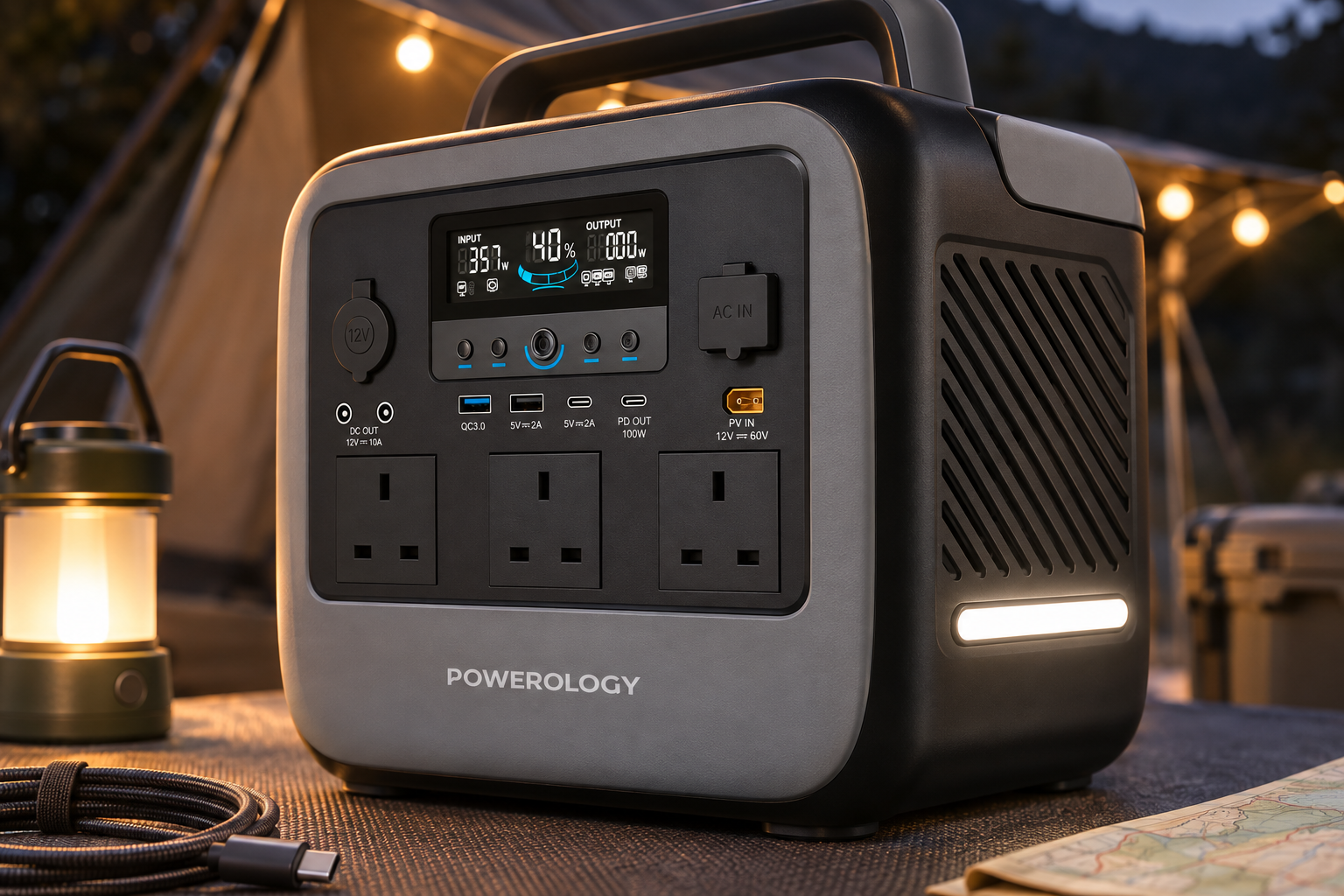
Its port selection is especially useful when different people bring different cables. Alongside AC and DC connections, there are USB-A outputs, two USB-C ports and wireless charging up to 15W. The Type-C1 port supports up to 100W PD, while the second Type-C port provides up to 15W. That flexibility helps reduce adapter clutter while keeping compatible personal tech organized.
Use the clear power monitoring display as part of your routine before setting off and at each longer stop. Keep the unit dry, allow the side ventilation grille to remain clear, and avoid placing loose drinks on it. These small habits make a road trip power station easier to manage when your focus should be on the route, not on untangling a last-minute charging problem.
Build a Better Campsite Power Zone
A sheltered campsite power area is where a portable power station earns its place. Rather than scattering devices around a tent, establish one dry, stable zone for charging a smartphone, running compatible electronics and keeping an LED camping lantern ready for after dark. The Pater IV’s multiple output options make it easier to create that single, orderly hub.
Start with low-draw essentials and connect only what you need. USB-A and USB-C ports suit compatible personal electronics, while the AC outlets can support compatible AC equipment within the 2000W continuous limit. The two 12V DC outputs are rated at 12V/10A, with a maximum 120W, giving another option where a compatible DC device calls for it.
Good campsite power is also about placement. Choose a dry, sheltered location, keep airflow around the ventilation area open and position cables so they do not become a trip hazard. Avoid rain, puddles, open flames and extreme heat. With those basics handled, the station supports the relaxed part of camping: maps checked, phones charged and light available when daylight fades.
Turn a Blackout Plan Into Practical Backup
When household power cuts out, the best response is calm prioritisation. The Pater IV offers instant backup power for compatible essentials, but every emergency power backup plan should begin with the same question: which devices are most important right now? Communication, a phone, a laptop for urgent work and appropriate lighting are often more valuable than trying to power everything at once.
Set up in a dry, ventilated space such as beside a home-office desk, with nothing blocking the side grille. The power monitoring screen helps you keep an eye on available power, so you can make informed choices as the interruption continues. Connect one priority device at a time, then add another only after checking its rating and your combined load.
It is equally important to know the boundaries. Do not assume every household appliance is suitable simply because it has a plug; assess its stated running demand against the 2000W AC output limit. The Pater IV is a portable generator-style power source for planned, compatible loads, not a substitute for safe electrical judgment. A written household priority list makes that distinction easy under pressure.
Connect the Right Devices, the Right Way
Compatibility is not just about finding a connector. It is about matching a device’s required voltage, connector type and power demand to the correct output. For AC equipment, review the device label and total the demands of everything using the three AC outlets. For DC equipment, confirm it is appropriate for the station’s 12V DC output specification before connection.
For everyday electronics, choose the most direct suitable port. Compatible phones and accessories can use USB-A, USB-C or the fast wireless charging pad, rated at 5W, 7.5W, 10W or 15W. Compatible USB-C laptops that support the required charging profile can benefit from the PD 100W Type-C1 output, while other compatible USB-C devices may use the Type-C2 port up to 15W.
Charging several items simultaneously is convenient, but it is still a shared energy budget. Keep an eye on total demand, unplug devices once they are topped up where practical, and avoid adding a high-draw appliance without reassessing the load. This measured approach lets the station’s charge-multiple-devices capability work in your favour rather than draining capacity on equipment that is not currently needed.
Recharge Around Your Schedule
A portable power station is most useful when it is ready before you need it. The Pater IV supports AC charging at up to 1300W, giving you a direct way to prepare at home ahead of a trip or to restore its charge after an outage. Recharge timing will vary with conditions and state of charge, so use the display rather than relying on a fixed estimate.
For off-grid planning, it also accepts DC input up to 400W with MPPT, across a 12–60V, 10A input range. With a compatible portable solar panel, this creates a practical solar-compatible route to replenishing power away from fixed sockets. Solar availability naturally changes with weather, placement and daylight, so treat it as a flexible input rather than a guaranteed timetable.
Create a simple readiness ritual: recharge after each use, check stored power before departure, pack only the cables you need and plan where the station will sit safely at your destination. That preparation turns flexible recharging into a real benefit. You are not merely carrying capacity; you are carrying a power plan that can adapt to the journey or disruption ahead.
Get More From Every Watt-Hour
Stretching stored power does not require complicated maths. Begin by using direct DC or USB charging for compatible personal devices instead of adding unnecessary conversion steps. Next, avoid leaving nonessential equipment connected. Even small loads can add up over a long evening or an extended interruption, especially when the battery is also supporting a laptop or other priority device.
Use power in stages. On a campsite, charge navigation and communication devices first, then move on to optional equipment. At home, restore phone power and set up essential work gear before considering convenience loads. The Pater IV’s display-based monitoring makes this easier because you can check the station rather than guessing how much reserve remains.
Finally, protect the station’s working environment. Keep it dry, keep the ventilation area unobstructed and do not expose it to extreme heat. Built-in safeguards are an important part of the design, but thoughtful use remains essential. Combining safe placement, sensible load management and a clear recharge plan is the best way to make the available energy go further.
Be Ready for the Next Big Moment
The Pater IV makes sense for people whose plans do not always happen beside a wall outlet: families setting out on a long drive, campers creating a sheltered charging point, event teams working from a covered control station and households preparing for an unexpected blackout. Its strength is not one single port; it is the combination of capacity, output options and monitoring.
Before each use, confirm your compatible devices, check their power requirements and decide what matters most. Respect the 2000W continuous AC limit, reserve capacity for priority needs and keep the unit in a dry, ventilated location. These checks take minutes, yet they make portable power feel far more dependable when conditions become busy or uncertain.
From a route change on a road trip to an evening without mains electricity, the Powerology Pater IV Portable Power Station gives you a structured way to stay connected and prepared. Pack the right cables, recharge in advance and use its available outputs thoughtfully. Big moments are easier to enjoy—or manage—when your essential power plan is already in place.