A great outdoor plan should not be dictated by the nearest wall socket. Whether your itinerary is a quiet campsite, a full weekend at a festival, or a work-from-nature setup beyond the city, the Powerology Helios Flex 300W Topcon Folding Solar Panel - Black gives your power plan a renewable starting point. It is a portable solar charger designed to charge compatible power stations and other off-grid devices, helping you spend more time where you actually want to be.
Its headline figure is up to 300W peak power, but the bigger benefit is flexibility. Rather than treating stored power as a fixed amount that only declines through the day, you can use daylight to replenish a compatible battery system. That can make camping electricity, event-day charging, and remote work feel far more considered.
The Helios Flex is built around TOPCon monocrystalline cells with up to 25% cell efficiency, plus an ETFE-laminated surface and IP67 waterproof protection. Those details matter when the plan involves long days, changing skies, dust, and gear that has to move with you. The right setup is not about promising unlimited energy; it is about matching generation, storage, and use with realistic expectations.
Start with a simple off-grid power chain
The most useful way to think about off-grid power solutions is as a chain: sunlight feeds the solar panel, the panel feeds a compatible power station or device, and that stored or delivered energy supports the equipment you need. The Helios Flex 300W is the generation part of that chain. A power station becomes the energy reserve that lets you charge or run equipment when the sun is lower or temporarily unavailable.
Before connecting anything, check the input requirements and connector compatibility of the power station or device you intend to charge. The panel uses MC4 output connectors and has a 38.4V voltage at maximum power. Compatibility is a practical safety step, not a detail to skip: use the correct cables and follow the receiving device’s instructions.
From there, build around priority. A campsite might reserve energy for essentials first, then personal devices. A festival group may focus on keeping phones and a battery system ready across a long day. A remote workstation may make power station capacity and laptop charging the central concern. Plan the energy path before departure, and every component has a clearer job.
Make campsite power work harder
For camping, reliable electricity is less about recreating home and more about supporting a comfortable, well-organised base. The 300W solar charging capacity of the Helios Flex can help replenish a compatible power station during daylight, so you can manage the electronics that make a trip easier without immediately relying on a mains connection.
Set a routine around the weather and your camp schedule. Put solar collection early on the day’s checklist, then use the stored energy deliberately later. This helps separate solar charging outdoors from the moments you want to enjoy after sunset. It also encourages sensible habits: charge what matters, avoid leaving every device connected unnecessarily, and keep an eye on the power station’s own display or indicators.
Placement matters as much as equipment. Choose an open area with the best available access to daylight, while keeping walkways, cooking areas, and busy tent entrances clear. The panel’s fold-out rear supports help position the array upward-facing. Revisit the setup as sunlight moves, provided conditions and your campsite rules allow it.
The result is a more capable camp without overcomplicating it. Portable power planning lets you pair daytime collection with stored energy, while the foldable format keeps the system practical to transport with the rest of your outdoor kit.
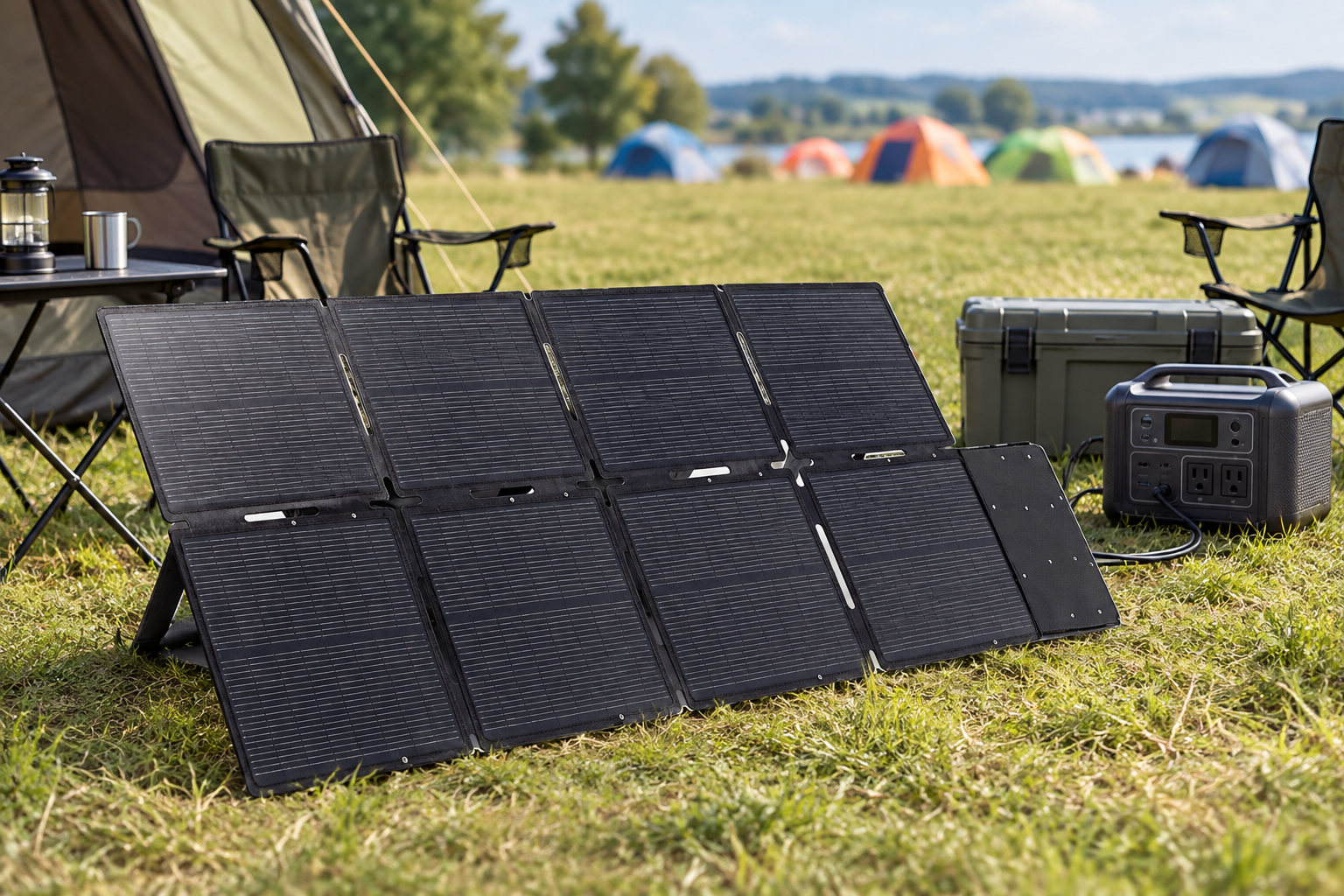
Keep a festival setup organised
Festival power has its own rhythm: long days, crowded spaces, limited personal space, and several people hoping to stay connected. A portable solar charger can give a compatible power station a daylight recharge opportunity, but the best approach is still a disciplined one. Decide whose devices are essential, when charging happens, and where cables will remain protected and tidy.
The Helios Flex brings useful travel-minded details to that plan. Its ultra-compact foldable design, built-in carrying handle, and storage pocket for cables and accessories help keep the solar side of the setup together between locations. Packing connectors in one dedicated place is a small habit that can prevent a frustrating search when the light is right.
Use a calm, secure area rather than a crowded thoroughfare for any charging station. Keep the panel and receiving equipment clear of foot traffic, and never assume a public outdoor environment will protect gear for you. The panel’s IP67 waterproof rating offers strong weather protection, yet careful positioning and sensible supervision remain part of responsible use.
Most importantly, treat solar as a daylight resource, not an instant refill button. Share available energy wisely, recharge the power station when conditions are favourable, and save its stored capacity for the times that matter most. That is how festival charging stays helpful instead of becoming another logistics problem.
Build a better work-from-nature routine
A day of work outdoors needs more than a scenic backdrop. It needs a plan that protects focus, keeps devices ready, and avoids turning every percentage point of battery into a distraction. Pairing the Helios Flex with a compatible power station creates a more deliberate remote-work system: collect solar energy during the day, then use the power station as the stable hub for your approved work devices.
Start by identifying the equipment that genuinely earns a place in your setup. For many people, that means prioritising a laptop and communication devices, then considering any other approved essentials. Work to an energy budget rather than packing every accessory you own. Lower-priority devices can wait until the key tools have enough reserve.
Choose a work location with both usable light for the panel and a comfortable, sheltered place for you. The two do not have to be the same spot. Give the solar array clear daylight access, then set up your desk area so reflections, heat, wind, and distractions do not undermine the work session. Separate energy collection from your workspace where cable length and safety allow.
The panel is rated for an operating temperature range of 10°C to 65°C. Always consider the full outdoor environment and your connected equipment’s requirements too. A productive work-from-nature day is built on preparation: charged essentials, compatible connections, a clear backup plan, and realistic expectations of the available sun.
Use sunlight intelligently, not hopefully
Solar output is shaped by conditions. The Helios Flex can generate up to 300W peak power, but “peak” is not a guarantee that every hour will deliver the same result. Sun angle, cloud cover, shade, season, location, cleanliness, and panel orientation all affect the energy you can collect. Good planning begins by accepting that daylight is variable.
Give the panel the clearest available exposure and avoid partial shade wherever possible. A small shaded area can compromise collection more than many people expect, so look up as well as around: trees, vehicles, tents, flags, and structures can all change over the course of a day. Check the array regularly rather than setting it down once and forgetting it.
The TOPCon solar cell design and stated 25% cell efficiency make the most of the panel’s collection area, while the ETFE lamination is designed to stand up to wear and support a longer lifespan. These are meaningful design advantages, but they work best alongside good user habits: keep the surface clear, use secure placement, and avoid unnecessary obstacles to sunlight.
Think in collection windows. If the forecast and location offer a strong stretch of daylight, use it to build the power station’s reserve before you need it. Charge ahead of demand whenever possible. That timing is often more valuable than trying to recover energy after several devices have already drained the battery.
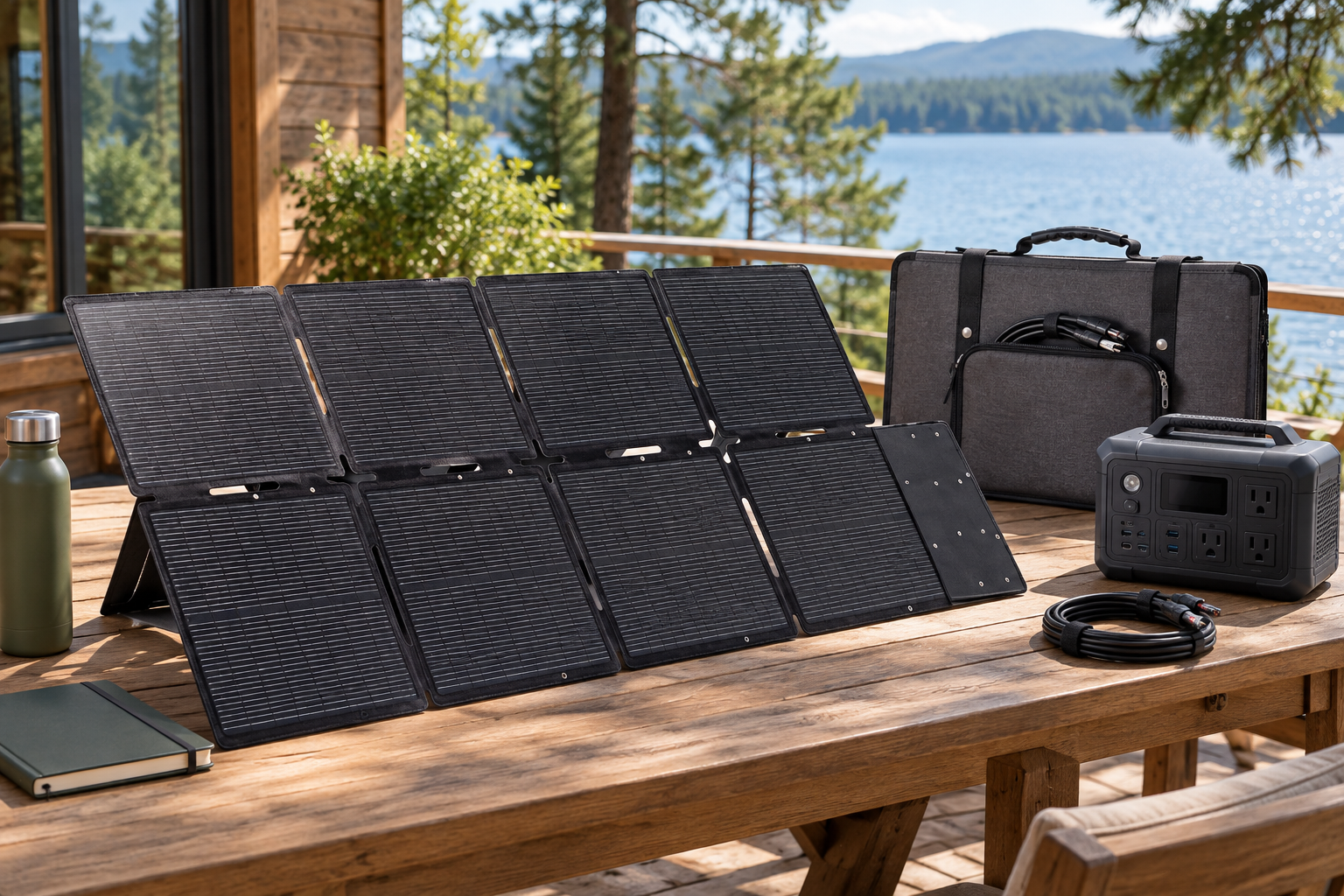
Pack, place, and protect your system
Outdoor power works best when it is easy to deploy and easy to put away correctly. The Helios Flex folds into a transport-friendly format with a built-in carrying handle and storage pocket, allowing cables and accessories to travel alongside the panel. Keeping the system consolidated helps you leave with the pieces you need and return with the pieces you brought.
At your destination, choose stable ground and a location that will not create a trip hazard. Keep connectors and cables organised, route them away from common paths, and follow the guidance supplied with the compatible power station or device. Connection discipline is especially valuable outdoors, where uneven ground and frequent movement can turn a neat setup into a messy one.
The panel’s IP67 waterproof protection is designed for changing weather, and its ETFE-laminated surface is built to handle outdoor wear. Even so, weather resistance does not mean ignoring conditions. Protect connected equipment according to its own rating, secure loose items as the weather changes, and pack down if conditions make your wider setup unsafe.
After the trip, take a moment to inspect and repack. Store cables in the pocket, keep connectors clean and dry, and avoid leaving the kit loose among heavy or sharp gear. Careful storage protects convenience: the next outing starts faster when your charging system is complete and ready.
Choose the right energy priorities
The most capable solar panel still benefits from a clear list of priorities. Before leaving, estimate which devices are essential, how long you expect to be away, and when you will have real opportunities for sunlight. This turns a vague wish for camping electricity into a practical power plan built around your own trip.
Match the power station to the role you need it to play, and verify that its solar input is compatible with the Helios Flex’s MC4 connection and electrical specifications. The panel lists 44.8V open-circuit voltage, so it is important to review the receiving equipment’s limits before connection. When in doubt, consult the relevant product documentation rather than making assumptions.
Then reduce waste. Charge devices before departure, bring only the adapters you need, and avoid running optional equipment while energy is being reserved for essentials. Efficiency is also behaviour: a thoughtful charging schedule can stretch your available stored power as effectively as adding more hardware.
Finally, keep a fallback in mind. Weather can shift and outdoor schedules can change. A fully charged compatible power station before you leave, plus sensible device management, gives the solar panel time to contribute rather than forcing it to solve every energy need immediately. Prepared power feels effortless because the decisions were made in advance.
Go farther with a renewable power plan
The strongest reason to bring the Helios Flex is not simply to add another item to your gear list. It is to make longer, more independent days possible with a system that fits the way you travel. Its foldable carrying structure, 300W peak power, and solar-focused design make it a useful foundation for compatible off-grid setups.
For campers, it can support a more comfortable base. For festival-goers, it can help turn daylight into a better charging routine. For remote workers, it can make a compatible power station part of a purposeful outdoor office. Across all three, the principle is the same: use sunlight to replenish energy, store it where appropriate, and spend it where it counts.
With TOPCon cells, an ETFE-laminated surface, and IP67 protection, the Powerology Helios Flex 300W Topcon Folding Solar Panel is equipped for outdoor conditions while remaining designed to travel. Check compatibility, respect changing conditions, and give the panel the clear exposure it needs.
That is how you extend the adventure. Solar charging outdoors becomes part of your routine, not a last-minute workaround—giving you a smarter way to stay prepared wherever the day takes you.